
 Whether it’s the air conditioner in your car or the HVAC system in your house, you’ve probably heard a thing or two about Freon.
However, few people understand exactly how Freon works, and why it’s important that your AC system has the proper level of Freon in it to operate normally. Here is a quick review of what Freon is, how it works, and other interesting details.
What is Freon?
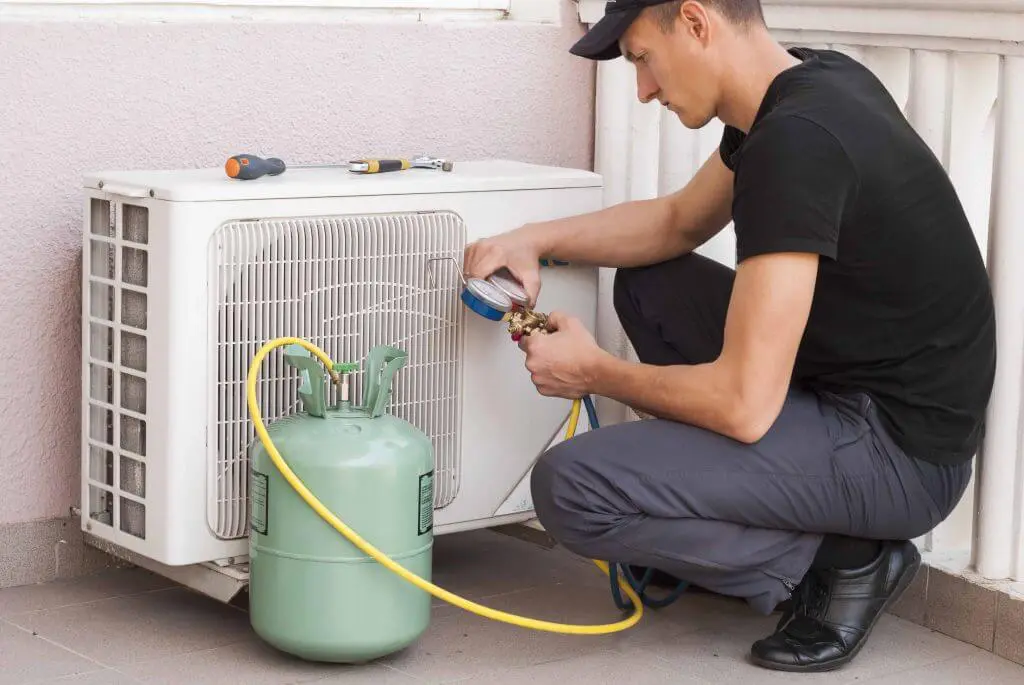
Freon is actually a brand name used for a type of refrigerant known as R-22. R-22 is a hydrochlorofluorocarbon (HCFC) refrigerant that contributes to ozone depletion when released into the atmosphere.
As such, it is being phased out in favor of newer refrigerants that are less harmful. However, many people continue to use the name Freon to describe all forms of refrigerant, despite the fact that this is inaccurate.
Why is R-22 a Problem?
R-22 is an HCFC refrigerant. Like other ozone-depleting substances, it can damage the ozone layer when released into the atmosphere. This can happen any time an air conditioner leaks, or in the process of servicing an air conditioner. In addition, the production of R-22 Freon refrigerant also creates a number of hazardous byproducts that also deplete the ozone layer.
The production and import of R-22 for use in existing air-conditioning equipment has been phased out in the United States. Existing systems can still be serviced with recovered, recycled, or reclaimed R-22, but availability and cost can make major repairs less practical as systems age.
What is Freon Used For?
Refrigerant moves through a closed loop in your air-conditioning system, absorbing heat inside your home and releasing that heat outdoors. Inside the evaporator coil, the refrigerant absorbs heat from indoor air and changes into a gas. The compressor then raises the refrigerant’s pressure and temperature before sending it to the outdoor condenser coil, where it releases heat and condenses back into a liquid.
The refrigerant then passes through an expansion device, which lowers its pressure and temperature before it returns to the indoor coil. This continuous cycle allows your AC system to remove heat from your home’s air rather than simply “creating” cold air.
How to Know if Your Unit Uses R-22
If you have an older air-conditioning system, check the manufacturer’s data plate or service label on the outdoor unit to identify the refrigerant it was designed to use. Look for a designation such as R-22, R-410A, or another refrigerant type.
That placard will denote what type of refrigerant was used in the system when it was installed. However, as more HVAC contractors are performing conversions to modern refrigerants, it is not uncommon to see a note on the placard indicating that it has been switched to the new refrigerant. Usually, this note is written in a marker where it can be clearly seen to avoid any confusion in the future.
What to Do if You Suspect a Leak
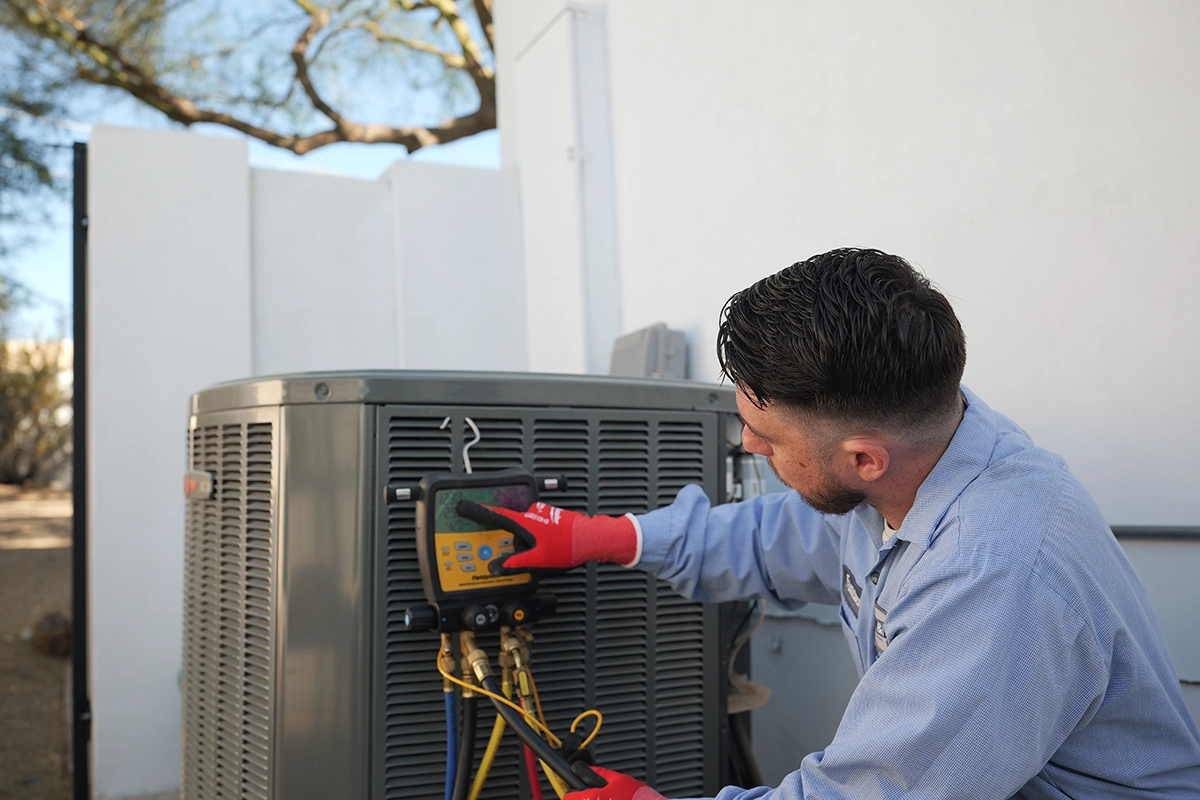
If you suspect that your system has been leaking Freon, it is always best to call a certified HVAC contractor. They can help identify the source of the leak before all of the R-22 escapes. Usually, your system will stop cooling or will start kicking on and off more frequently when the refrigerant is low because it is not able to reach the desired temperature without freezing up.
If a leak has occurred, your HVAC technician can help you determine the age of your system, what needs to be
repaired or replaced, and whether or not your system can be easily converted to the new refrigerant. If not, you could be looking at hundreds of dollars just to replace a couple of pounds of Freon before accounting for the cost of any repairs that need to be made.
Contact Day & Night for Expert HVAC Service
Day & Night Air has been servicing HVAC systems throughout the Phoenix area for many years. Our technicians can identify refrigerant leaks, determine what type of refrigerant your system uses, and explain whether repair or replacement is the better option for your system.
Call us today to schedule an appointment with our team.